
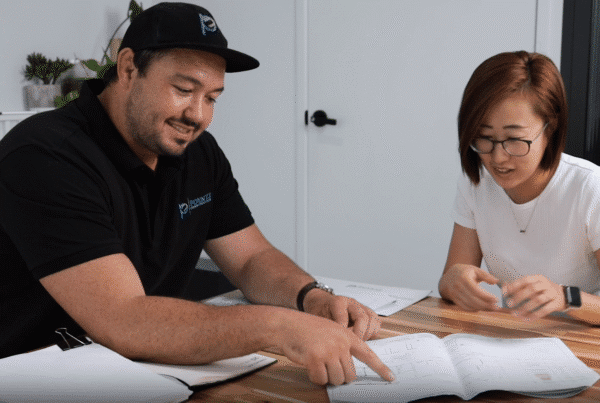
The Importance of Communication with Your Builder
For us at Poyntz Construction, the building process is a collaborative one. We break communication up into two components
- Off-site communication
- On-site communication
Off-Site Communication with Your Builder
Involves the way we communicate off the job site. We pride ourselves on being responsive to emails and phone calls, ensuring the client stays in control of their project. We utilise the client portals through our building software. This streamlines the construction process by providing a centralised space for communication, document sharing and approval tracking between builders and clients. This improves transparency and increases trust through shared access to quotes, invoices and variations.
On-Site Communication During Construction
Is vital to foster a level of trust. For us at Poyntz Construction, we see it as an opportunity for you as the client to see the transformation of your project on a regular basis. We usually set weekly on site meetings, at a regular mutually agreed upon time. Past clients have told us this opportunity to see the progress of the project enhances the experience, and they enjoy seeing the changes week to week! Clients can start to picture how everything will come together. They can see the family gathering around the outdoor area for a Sunday afternoon BBQ. Or cooking together in their updated kitchen. The other benefit of regular site meetings is the opportunity to identify and respond to any issues before or as they arise. This is another risk mitigation strategy to reduce variations through the build. Variations can be costly, if an issue is not identified in a timely manner.
Why Regular Communication Reduces Variations
Variations are one of the most common cost risks during a build. They often happen when details are missed, misunderstood, or confirmed too late. Regular communication helps you stay ahead of this. When you stay involved and informed, you can:
- Confirm selections before work begins
- Clarify details early, not after construction has started
- Review plans and changes in real time
- Raise questions before they turn into problems
Weekly site meetings give you a clear view of what’s happening. You can see progress, check finishes, and make decisions on the spot.
- Off-site communication also plays a key role.
- Client portals, emails, and approvals create a clear record of decisions.
- This reduces confusion and keeps everyone aligned.
- Small issues can turn into costly changes if they are missed.
- Clear and consistent communication helps avoid this.
- It keeps your project moving forward with fewer surprises and better control over your budget.
We pride ourselves on being approachable and aim to foster a relationship where everyone feels comfortable. Ultimately this is your build, so your input is crucial!
For more information about our communication strategies, please refer to our capability statement below.
Talk to Poyntz Construction about your project
How often should you communicate with your builder during a project?
You should have consistent communication throughout the build.
- Weekly on-site meetings are common
- Regular updates via email or client portals help track progress
- Key decisions should be confirmed as they arise
This keeps you informed and reduces delays.
What should be discussed during site meetings?
Site meetings are your chance to stay across the details.
You should review:
- Current stage of construction
- Upcoming work and timelines
- Selections and finishes
- Any issues or changes
This helps you make decisions early and avoid rework.
Why do variations happen during construction?
Variations usually happen when something changes after work has started.
Common causes include:
- Late design changes
- Unclear plans or missing details
- Site conditions that were not visible earlier
Clear communication helps reduce these risks.
How do builders keep clients informed during a project?
Most builders use a mix of communication methods.
This can include:
- On-site meetings
- Phone and email updates
- Client portals for documents and approvals
This keeps everything organised and easy to track.